Elementor #2640

The Mingenew and Upper Irwin region of Western Australia is situated on the traditional lands of the Yamatji people, with deep cultural and historical ties held by the Wattandee and Amangu cultural groups. Long before Mingenew was established as a town, and before roads, fences, and farms divided the landscape, Aboriginal people lived on and actively managed this region. This was not an empty landscape waiting to be settled; it was Country: known, travelled, named, and cared for.

The Upper Irwin holds profound geographic and spiritual significance. The area forms a fascinating cultural borderland, where the Southern Nhanda dialect continuum traditionally spoken by local groups met the northern limits of the Noongar nation to the south. Within this landscape, permanent waterholes, freshwater springs, and seasonal food sources shaped where people travelled and camped. Deep knowledge of plants, animals, stone, weather, and water was systematically passed down from one generation to the next.
Water, in particular, was the central axis for life and movement, connecting places across the district. For thousands of years, reliable water sources like the Irwin River and its surrounding permanent springs dictated the paths of Aboriginal travel, trade, and seasonal camp locations.
 
However, the very availability of this reliable fresh water made the Upper Irwin an incredibly attractive landscape for British colonisation. When European explorers and pastoralists pushed into the Mid West in the mid-19th century, they did not find water by chance; they deliberately targeted the established waterholes and fertile river valleys looked after by the Wattandee and Amangu people.
 
Because access to fresh water was the single most critical factor for survival in the Western Australian interior, these natural reservoirs became the exact points where European settlers chose to establish their homesteads, stock routes, and towns. This overlap of needs meant that traditional water sources quickly became the primary flashpoints for land competition.
Placeholder

Tangible evidence of this long history remains in the district’s material culture today. Stone artefacts held by the Mingenew Museum include locally found axe heads, as well as grinding stones and stone plates associated with Yandanooka and Nungatah, north-east of Mingenew. These were practical tools, but they also represent generations of technical knowledge about raw materials, food processing, and environmental management.

The Shift to Station Labour
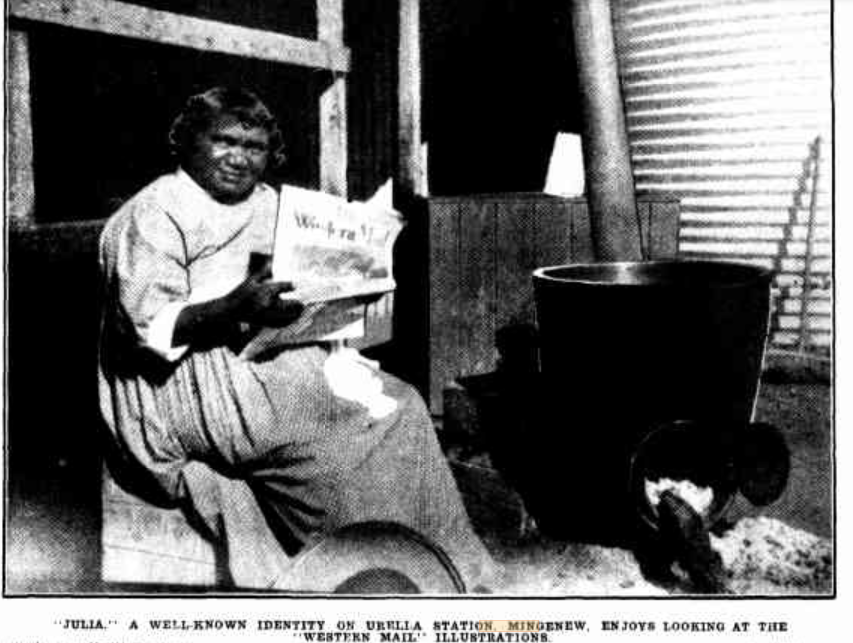
Yet, Aboriginal people did not disappear from the district as settlement expanded. Instead, they adapted to a rapidly changing economy out of both resilience and sheer necessity. As pastoral stations and fences progressively cut off access to traditional hunting grounds, waterholes, and seasonal foods, continuing an independent, traditional lifestyle was made virtually impossible. Working for the new landholders became the primary means for Aboriginal families to remain on their ancestral Country, secure food and blankets, and maintain a physical connection to their lands.
"Julia" from Urella Station

This transition involved very little personal freedom or choice. Legally and structurally, the state apparatus gave Aboriginal people minimal alternatives to European labour regimes. Under early colonial regulations, such as the Aborigines Protection Act 1886, Aboriginal people over the age of 14 were locked into strict written employment contracts. Leaving a station without permission or failing to perform work could result in criminal prosecution, tracking by police, or forced return by local magistrates. This was a system of highly controlled, institutionalised employment where workers had no bargaining power.

This relationship was driven by a deep—though highly unequal—dependence. Early European settlers were unfamiliar with the harsh interior and faced a chronic shortage of imported European labour. They relied heavily on the Wattandee and Amangu people, whose intimate, generational knowledge of local water sources, animal behaviours, and regional geography was invaluable.
Consequently, local Aboriginal people became central to the development of the pastoral and agricultural industries in the Mid West. Local men were heavily employed as shepherds, stockmen, drovers, shearers, horse breakers, and labourers, while Aboriginal women undertook essential domestic, culinary, and station work. Children, too, were routinely expected to work. This deep local knowledge, combined with decades of underpaid or unpaid physical labour, became foundational to the financial success of stations and farms across the Mingenew district.

The conditions under which this work took place were far from equal. A government inspection of Yandanooka Station in 1901–02 provides a rare archival glimpse into the lives of the Aboriginal people living and working in the district at the beginning of the twentieth century. The inspector recorded 16 adults and three children, preserving rare biographical details that highlight their names and circumstances:

The archival records show that people frequently moved between properties as seasonal work became available. For instance, Wabby Goorah and Enginah moved between stations, timing their return to properties owned by the Clinch family for the shearing season. Another resident, Tarraminah, whose husband had recently died, maintained family security through an adult son working at Yandanooka for a Mr Phillips, alongside a twelve-year-old son named Gilbill (also known as Joe), who was already noted for his riding skills.

Institutional Control & Changing Laws

While the 1901 station entries reveal local mobility and strong family connections, the official language of the time exposes a harsh reality. State officials evaluated Aboriginal people strictly through an economic lens, measuring their human value by their capacity for physical labour. Even older people, like Jankera and Cokurngoo, were subjected to bureaucratic assessments regarding whether they remained fit for “light work.”
 
Children were not exempt from these institutional expectations. Of twelve-year-old Joe, the inspector explicitly wrote that the child “should be made to work for his living” and “could be made very useful on any station.” Elsewhere in the same Yandanooka report, the administrative apparatus recommended the removal of a young Aboriginal girl from her family unit. Consequently, the archival record presents childhood, forced labour, and state intervention side by side.
 
The Yandanooka inspection also illustrates that individual relationships between Aboriginal workers and pastoralists varied. The inspector noted favourably that Mr Phillips provided his workforce with food, clothing, and blankets, reporting that they appeared to be in good physical condition. Yet, even where individuals were treated with paternalistic benevolence, the overarching relationship remained unequal. Power rested entirely with government officials, who retained the legal authority to determine employment terms, ration allocations, and the removal or institutionalization of children.
 
Other historical records from this early era highlight the heightened legal and physical vulnerabilities of Aboriginal people under early state jurisdiction, where law enforcement was heavily focused on tracking down “offenders” and enforcing strict labour compliance:
  • The 1893 Tracker and the 1895 Transits: In 1893, an Aboriginal native tracker was transferred to Mingenew alongside Constable Simpson to assist with visiting settlers, caring for the police horse David, and searching for “native offenders.” Tellingly, while the horse’s name was noted, the tracker’s own name and place of residence were never deemed important enough to be recorded in official archives. The primary role of the local justice system as a mechanism of tracking and containment became clear in 1895, when two Aboriginal men were apprehended further south and held briefly at Mingenew before being sent by train to the Dongara police lock-up. One was charged with the larceny of rations, while the other was arrested simply for “deserting” his workplace while still under an unexpired employment agreement.
  • The Simpson Incident (1908): This pattern of local police overreach continued into the next decade. Local court records from 1908 detail a volatile incident in which Mingenew’s long-serving constable, Louis Simpson, was accused of physically assaulting an Aboriginal tracker who was employed by Simpson’s own wife. When a European bystander tried to intervene to protect the tracker, Constable Simpson used his state authority to charge the bystander with “interfering with police duties,” demonstrating how difficult it was for Aboriginal people to find protection or neutrality under local law enforcement.
Placeholder

As the twentieth century progressed, these unequal dynamics were heavily reinforced by law. With the passage of the landmark Aborigines Act 1905, the Western Australian Government consolidated expansive, paternalistic statutory powers over the daily existence of the state’s Indigenous population. This legislative framework legally authorized state departments to regulate geographic movement, employment contracts, personal relationships, marriage, and family structures. Most notably, it granted the Chief Protector of Aborigines legal guardianship over all Aboriginal children, providing the legal mechanism for forced removals.
While these policies were drafted within metropolitan boardrooms, their enforcement directly dictated everyday life within the Mingenew and Upper Irwin districts. Local police officers, acting as ex-officio Protectors of Aborigines, monitored the community with high scrutiny through a system of state-controlled employment permits and passes. The long-reaching impact of this system is clearly demonstrated in the Carney Case (1937). This legal case involving a drover named Albert Edward Carney near Mingenew illustrates exactly how these restrictive 1905 legislative frameworks and employment permits continued to govern, monitor, and restrict the basic movement and employment contracts of Aboriginal workers decades after the Act was passed.
 
A primary mechanism of this localized social control was the strict regulation of alcohol and physical mobility. For example, in February 1936, local legal proceedings in Mingenew involving Kenneth Reid Bynder and his father highlighted the daily reality of these laws. Both men were targeted under the Act and sentenced to one month’s imprisonment with hard labour simply for “knowingly receiving intoxicating liquor”. Later that same year, Kenneth was targeted again by the Mingenew Police Court and sentenced to an additional three months’ imprisonment. These statutory prohibitions meant that an action perfectly legal for one Mingenew resident resulted in imprisonment for another, weaponising the law to restrict the civic freedoms of Aboriginal residents within the township.
print snip
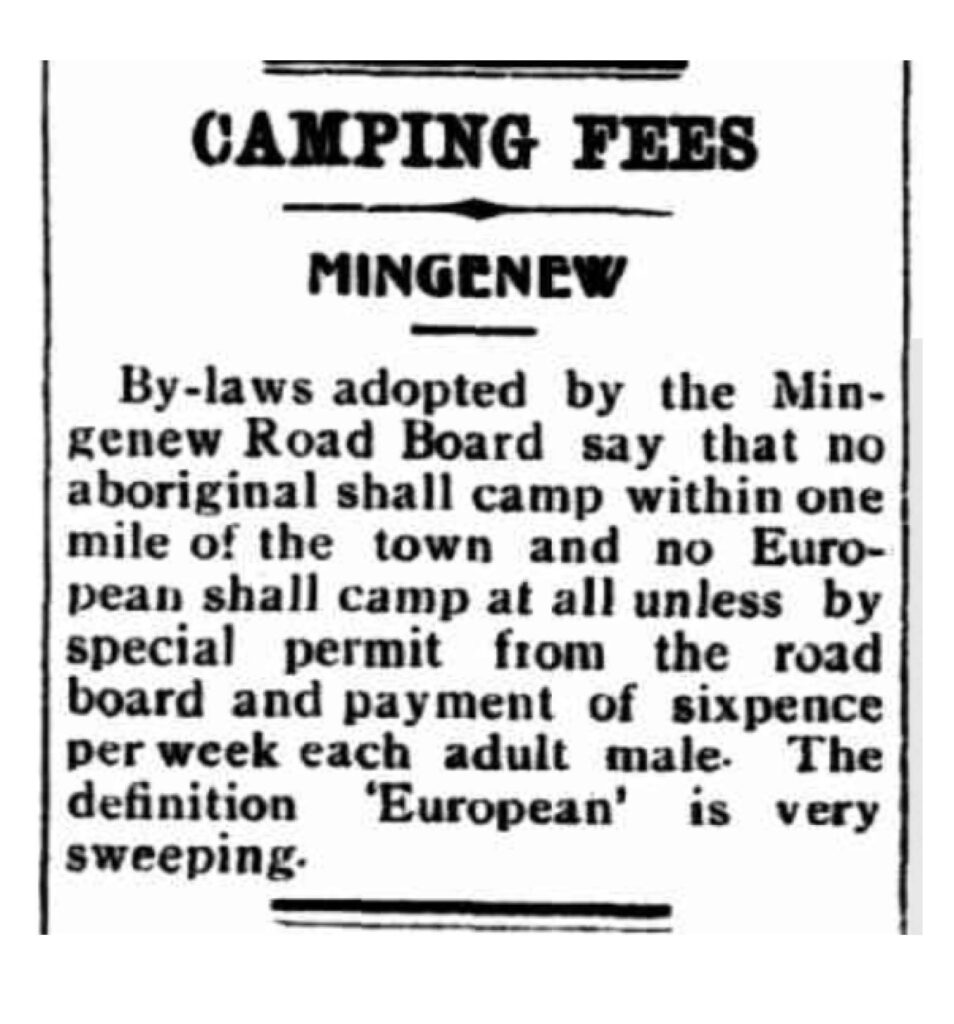
Physical restrictions also dictated where people could legally reside. In 1934, the Mingenew Road Board introduced local by-laws that strictly prohibited Aboriginal people from camping within one mile of the town site. European travellers, by contrast, faced no such exclusion and could camp freely with permission and the payment of a small fee.
 
Education reflected this same deep social divide. Thomas Cameron later remembered being forbidden from speaking his traditional language at school, facing immediate punishment if caught by teachers. Both Cameron and Reg Brockman recalled systemic segregation and barriers to state schooling; for many local families, convent schooling run by religious orders became the only educational avenue available when secular opportunities were closed to them

Exemption, Citizenship, and the Contradictions of Rights

For some Aboriginal people, a state-issued Certificate of Exemption offered a legal avenue to escape the most restrictive parts of the system. Later, the Native (Citizenship Rights) Act 1944 provided a framework through which Aboriginal people could formally apply for the basic civil rights denied to them under discriminatory legislation. However, these freedoms were never granted automatically—they had to be actively applied for. Applicants were subjected to intrusive official scrutiny, judged on their character, employment history, and lifestyle. To succeed, they were often expected to prove to the state that they had distanced themselves from their own families and Aboriginal associations.
In 1946, former Mingenew resident Placido Farrell became Western Australia’s very first successful applicant for citizenship rights under this new legislation. Farrell was a well-respected member of the community who had lived and worked in the Mingenew district for a decade, previously held a Certificate of Exemption, and played for local cricket and football clubs. Furthermore, he was a father whose son had served Australia overseas during the Second World War.
Farrell’s landmark 1946 case exposes the deep contradictions of the era. An Aboriginal person could work, raise a family, play sport, and contribute fully to the community, yet still bear the burden of proving to the government that he was suitable to receive the basic rights his non-Aboriginal neighbours possessed by birth
Military service highlighted another profound version of this inequality. Edward “Ted” Ronan, born at Mingenew in 1917, enlisted during the Second World War and served on the front lines with the 2/4th Machine Gun Battalion. Captured following the fall of Singapore, Ronan survived more than three years as a Japanese prisoner of war, enduring brutal forced labour on the notorious Burma–Thailand Railway.
 
Yet, serving his country in uniform did not automatically dismantle the legal barriers blocking Ronan at home. Upon returning to Western Australia, he still had to navigate the bureaucratic system, ultimately being issued a Certificate of Citizenship in 1948. His trajectory, alongside that of Placido Farrell, serves as a powerful historical reminder: Aboriginal men could sacrifice for their nation overseas, while their recognition as equal citizens at home remained something the state could formally choose to grant or withhold.
 
These bureaucratic controls did not disappear with the end of the war, stretching well within living memory. In 1953, Mingenew resident Rose Hill was still required to hold a formal Certificate of Exemption from the Native Administration Act to navigate her daily life.

Littlewell: Life on the Edge of Town

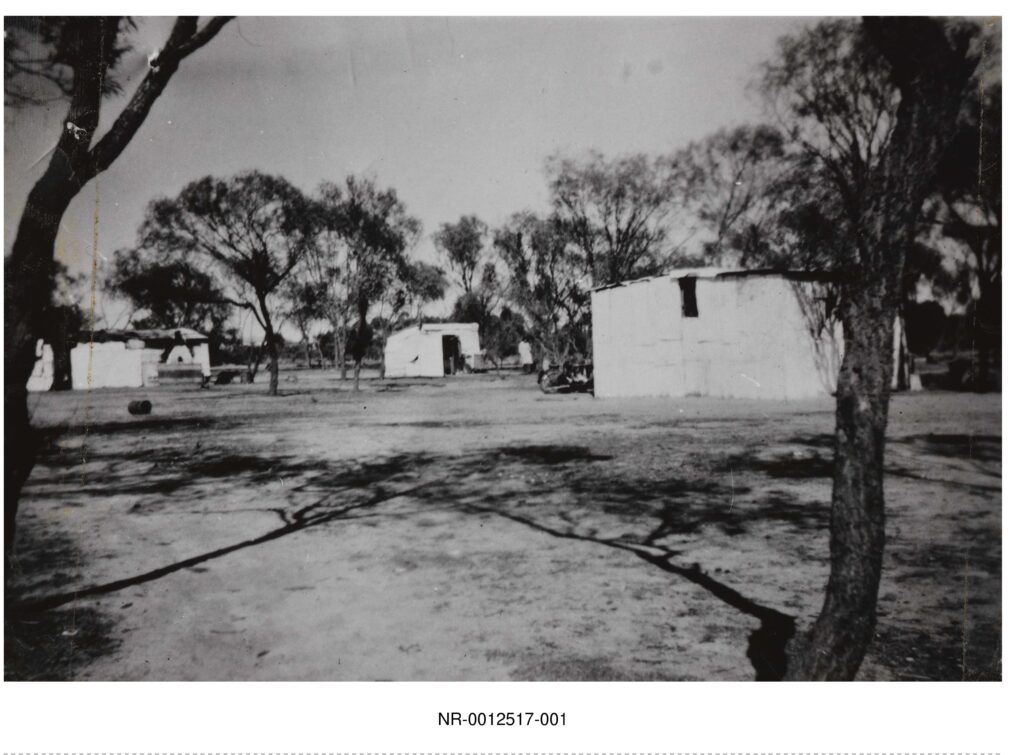
Government control was also carved directly into the local landscape. Just east of the town boundary lay a ten-acre (four-hectare) parcel of land designated as Reserve 4818—known to Aboriginal families as Littlewell, or Buri Wonduri. While local families held deep connections to this pocket of land stretching back to the late nineteenth century, the town’s 1934 camping restrictions turned Littlewell into an increasingly critical place of residence for displaced families tied to Mingenew and the surrounding district.
While the physical distance between Littlewell and the Mingenew town centre was small, the social and legal divide was vast. As families were pushed out of the township, the reserve faced severe population pressures. Thomas Cameron later estimated that roughly 150 people lived at Littlewell at one time, while other former residents remembered periods of even greater overcrowding.
Housing on the reserve was exceptionally basic. Thomas Cameron, the eldest of 14 children, recalled his family living in a two-bedroom corrugated-iron house built without insulation or air-conditioning. Early shelters were self-constructed from whatever materials could be salvaged, including scrap corrugated iron, wire, and bush timber, often finished with dirt floors.
Water was a precious resource, drawn entirely from the small well that gave the reserve its English name. Children carried the heavy physical burden of water collection, hauling buckets and old kerosene tins back to their houses, sometimes using old prams to transport the load. Reg Brockman remembered small homes with drafty gaps between the walls, floors, and roofs, entirely lacking electricity.
nr pdf print 1786983802157