Going to School in the Bush
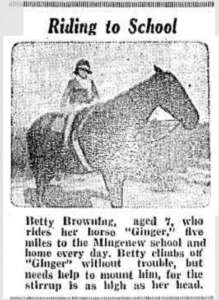
What if your journey to school began on horseback?
Imagine growing up on a farm in the North Midlands more than a century ago. There is no school bus waiting at the gate. The roads are little more than dirt tracks and the nearest town may be many miles away. Your school might be a single room beside a railway siding, a hall borrowed from the church, or a tiny building standing almost alone among farms and bush. You might walk. You might ride a horse. If your family owns a sulky or spring cart, you might drive — sometimes with younger brothers and sisters beside you.
This was school in the bush.
Why were schools scattered everywhere?
As farming expanded across Western Australia in the late nineteenth and early twentieth centuries, families spread across enormous distances. Railways pushed into new districts and farms followed, but schools could not always keep pace. Rather than expect children to travel to distant towns, the government opened small schools wherever enough children could be gathered. Across what is now the Shire of Mingenew, nine small schools operated between the late 1800s and 1950, alongside the larger and longer-lived schools at Mingenew and Yandanooka. Some lasted decades. Others survived only a year or two. Their names trace a map of communities that have largely disappeared: Urella, Strawberry Siding, Greenbrook, Guranu, Geraldine and Overland.

A classroom wherever one could be found
A bush school did not necessarily begin with a school building. At Strawberry Siding, classes were held in the Catholic Hall after the Bishop of Geraldton gave permission for it to be used as a government school. The school operated from 1918 until 1929.
At Yandanooka, classes began in the hall in 1929. A purpose-built school followed in 1934 and was replaced again in 1968. When falling enrolments finally closed the school in 1978, the schoolroom itself was moved to Eneabba.
At St Joseph’s, Dominican Sisters began teaching in 1932, initially using a room attached to the church. A new convent was eventually built in William Street in 1948.
Other schools appeared among the farms themselves. Greenbrook, on the Yandanooka Road, opened in 1922 but lasted only until 1923.
Guranu, on a water reserve beside the Morawa Road, taught district children from 1924 until 1944.
Overland School was built on land provided by Arthur Downes of Yandanooka and operated from 1928 until 1944.
The district’s school story reaches even further back. Records refer to an early school at old Urella, now Yarragadee, where Maryanne McCarthy was teaching around 1865, and another at Geraldine.
Then there was Mingenew. Its government school opened in 1894 on an acre of land provided by S. J. Phillips. In 1959, children moved to a new school in Phillip Street — the school that continues to serve Mingenew today.
Step inside
Open the door of a little bush school and don’t expect rows of modern desks, screens or shelves of equipment. You might find a pine table and bentwood chair for the teacher, a cupboard, a portable blackboard and long pine desks seating as many as five children at a time.
Those long desks had no back support. By the 1920s teachers were complaining about the old “lengthy contraptions”, but replacement was slow. The more familiar dual iron-framed school desks gradually reached country classrooms during the following decades. Examples of these later desks can still be seen at the Mingenew Museum today.
Yet the lessons taught in these little rooms were not intended to be a lesser version of city schooling. Bush schools followed the same State curriculum, school year and primary course as their urban counterparts. Behind the system was an important principle: where a child lived should not determine whether they received an education.
Making that ideal work was another matter.
One teacher. Every age. Every subject.
Picture one teacher standing in front of a room containing children of several ages and ability levels. While one group practised arithmetic, another might be reading and another completing written work. Some schools had an additional “monitor” — often an older pupil or young person with no formal teacher training — who could teach under the direction of the head teacher.
And teaching the children was only part of the job.
Teachers were expected to care for the school building and grounds. Gardens mattered. They demonstrated order, pride and industry, and education inspectors took notice. Both Mingenew and Strawberry were among the early Western Australian schools specifically praised by inspectors for their neat and thriving gardens.
Teachers might also encourage parents to help clear a cricket ground or tennis court, organise socials to raise money, and somehow find sporting equipment. When there was no cricket wicket, a kerosene tin could do the job.
In a small settlement, the school could become much more than a classroom. It was somewhere to hold concerts, meetings, celebrations and community gatherings — one of the few places where widely scattered families regularly came together.
Would you have wanted the teacher’s job?
For many teachers, accepting a bush posting meant leaving family, friends and familiar comforts behind. Accommodation could be poor. Supplies were limited. Living costs were high and social life almost non-existent.
The pay didn’t make the proposition much more attractive. In 1914, the Teachers’ Union calculated that the lowest-paid teachers received £2 2s 3d a week, compared with £2 14s earned by an average porter or roadmaker. Most applicants were women, although authorities considered conditions in some newly settled districts unsuitable for female teachers. Male applicants were much fewer and were not always considered suitable for the work.
The little bush school therefore depended heavily on the person willing to stand at its blackboard.
Now imagine getting there…
Perhaps the hardest part of the school day happened before the first lesson began. Some children travelled by horse, sulky or spring cart. On arrival, the horse had to be unharnessed or unsaddled, tethered and fed — even when children’s hands were numb with winter cold.
Others walked. Their route might follow a rough track through uncleared bush rather than a road. There were snakes, bull ants and swooping magpies to contend with. In winter, creeks flooded. Children sometimes removed their boots, carried or threw them across the water and waded through.
Wet coats and boots could be dried beside the school stove or fireplace before it was time to make the same journey home. For children without good wet-weather clothing, improvisation was part of life. Historical accounts from Western Australian country schools recall wheat and sugar bags being fashioned into makeshift rain protection.
And tomorrow morning? They did it all again.
When the little schools disappeared
Better roads, motor vehicles and school transport eventually changed the equation. Children who once needed a classroom close to the family farm could travel further to a larger central school. One by one, many of the tiny bush schools closed. Some buildings were moved. Others were converted, abandoned or disappeared altogether. But look closely around districts such as Mingenew and Yandanooka and their story remains in old photographs, school registers, battered desks, former school sites — and in the memories of the families whose children once sat inside them.
The bush school was small because the community around it was small. Its importance was anything but.